
Client portals often require account setup that adds friction.
Feature
Secure client status pages without client account logins
Share private read-only status links so clients stay informed while your team keeps internal workflow controls private.
What this solves
Email-only status communication creates repetitive follow-up and confusion.
Teams need to show progress without exposing internal notes.
How secure status pages work in Navoqo
-
Step 1
Generate a tokenized read-only link
Each client status page uses a private tokenized URL rather than a public index.
-
Step 2
Share progress safely
Clients see current stage, key updates, and payment context without edit controls.
-
Step 3
Rotate or revoke access when needed
Teams can control link lifecycle as part of normal security hygiene.
See it in the product.
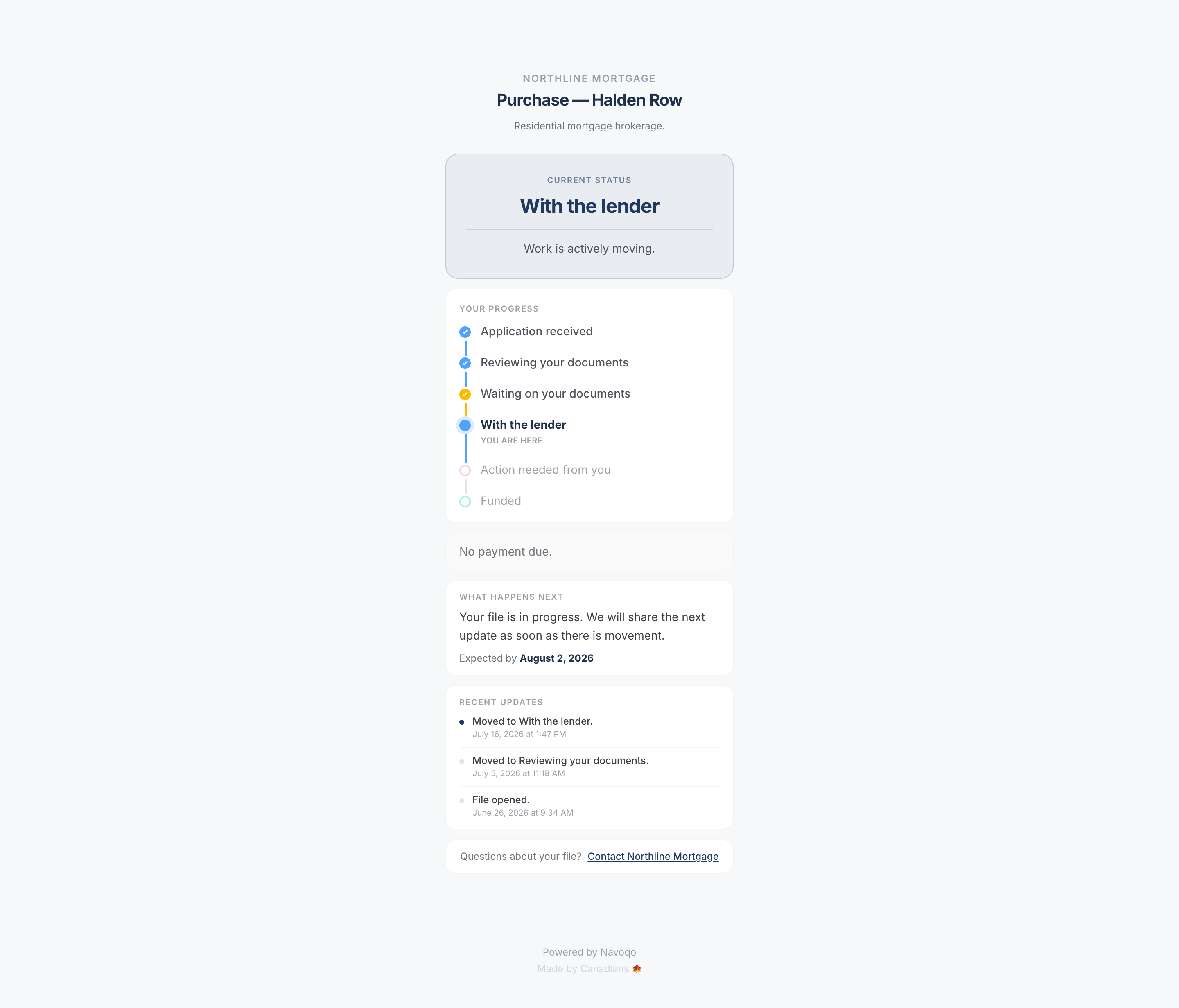
Client-facing status view
A clean page with stage, latest update, and next step.
Where this feature is most useful
Immigration document support
Applicant status questions and missing document follow-up consume case-working time.
Translation agencies
Project milestones move quickly, and clients expect timely delivery and payment clarity.
Freelancers and agencies
Freelancers and small agencies lose delivery time to status emails and manual invoice chasing.
Need cross-feature context? See How it works and Pricing.
Feature FAQ
Do clients need to create accounts?
No. Clients access status through private tokenized links with read-only visibility.
Can we disable an old status link?
Yes. Teams can rotate or revoke links when access needs to change.
Will clients see internal notes?
No. Internal operational notes stay private to your workspace.
Share client status pages without CRM bloat.
Your clients see a clean, secure page — no account, no password, nothing to configure.